Source UHF Passive RFID Poker Chip for Casino, Sports, and Events
Find and compare 30 UHF Passive RFID Poker Chip options for casino gaming, sports betting, and event tracking. Evaluate specifications, pricing, and supplier capabilities to select the right solution for your inventory management needs.
Key considerations
Products List


Custom Logo 13.56MHz ISO14443A Hf RFID Chip Poker Cards for Playing Game
$36.00 - $46.00
MOQ: 500 Pieces


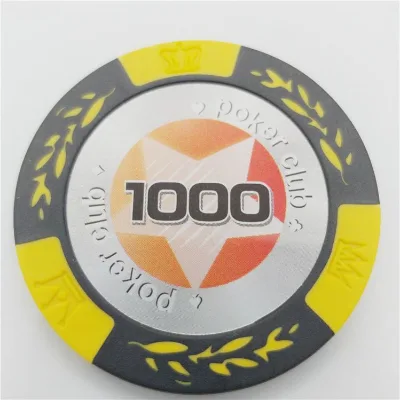
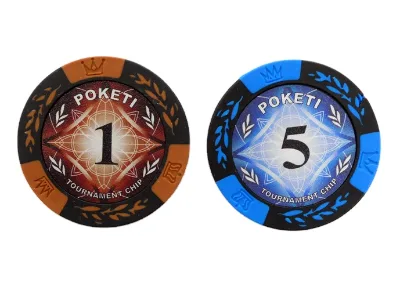


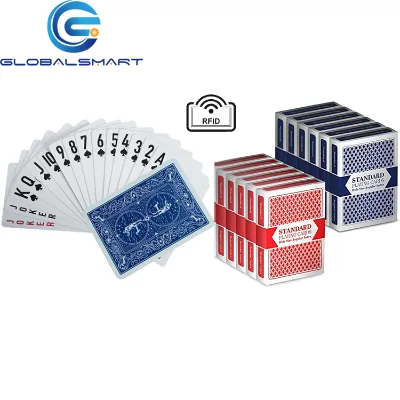
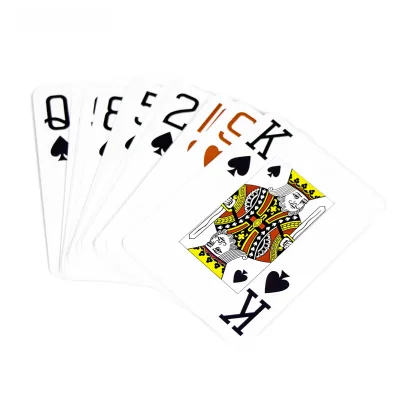

Comprehensive Sourcing Guide
UHF Passive RFID Poker Chip Sourcing Guide
The procurement of UHF passive RFID poker chips requires a clear distinction between the specific frequency bands and the physical form factors available in the current market. While the core keyword focuses on UHF technology, the supplied product data indicates a significant presence of High Frequency (HF) and Near Field Communication (NFC) solutions, specifically utilizing ISO14443A protocols. Buyers must verify that the supplier's inventory explicitly supports UHF standards, as the provided facts highlight HF and contact-type smart cards as the primary observed categories. This distinction is critical because UHF chips operate on different radio frequencies than the HF and NFC chips described in the source material, which typically function at 13.56 MHz.
Sourcing decisions should be grounded in the specific application requirements of the poker environment, such as casino table management or electronic game tracking. The observed product attributes list applications ranging from transportation to casino use, confirming that these chips are designed for high-volume, rapid identification tasks. However, the data also notes a "Passive Card" structure and "Contact Type" read-write methods for many listed items, which contrasts with the non-contact nature of typical UHF poker chips. Procurement teams must therefore scrutinize product specifications to ensure the selected chips match the intended non-contact, long-range reading capabilities required for poker table operations, rather than assuming all listed smart cards are suitable for UHF poker applications.
Product Scope and Observed Listing Signals
The market listing signals reveal a diverse range of card and chip formats, with observed models including RFID cards, customized cards, and specific NFC variants. The physical dimensions vary significantly across listings, with standard sizes noted as 85540.76mm, 88630.35mm, and 63*88 mm, alongside customizable options. This variability suggests that while standard poker chip dimensions are common, suppliers often offer tailored sizes to fit specific gaming tables or card readers. Buyers should expect to encounter a mix of PVC-based materials and memory structures, as the data confirms PVC as the primary material and lists memory capacities ranging from 144 to 888 bytes.
Listing signals also indicate a strong emphasis on customization capabilities, with suppliers offering custom logos, serial numbers, and QR code printing. The observed MOQ ranges from 1 to 10,000 units, providing flexibility for both small-scale testing and large-scale casino deployments. However, the presence of "Passive Card" attributes and "Contact Type" read-write methods in the data suggests that not all listed items are non-contact UHF chips. Buyers must carefully filter listings to identify those explicitly supporting UHF frequencies, as the current data heavily features HF and contact-based smart cards that may not meet the specific operational needs of UHF poker systems.
Technical Specifications to Verify
When evaluating technical specifications, the primary focus must be on the radio frequency and communication protocol to ensure compatibility with existing poker table infrastructure. The supplied facts highlight ISO14443A as a standard protocol for the observed HF and NFC chips, but UHF systems typically rely on EPC Gen2 or ISO 18000-6C standards. Buyers must explicitly request confirmation of UHF frequency support, as the provided data does not confirm UHF capabilities for the majority of listed items. Verifying the chip's ability to operate in the 860-960 MHz range is essential to distinguish true UHF poker chips from the HF and contact-based alternatives that dominate the current listings.
Physical durability and data retention are equally critical specifications for poker chips subjected to frequent handling and shuffling. The observed data cites a data retention period of 50 years and a flex life of at least 10,000 times according to ISO 2471 standards, which are strong indicators of long-term reliability. However, thickness variations are noted, ranging from 0.26mm to 0.35mm, and some listings specify a thickness of 0.85mm. Buyers should verify that the selected chip thickness aligns with the mechanical tolerances of their card readers and that the waterproof standard meets the international PVC requirements necessary for casino environments where spills and moisture are common.
Compliance and Safety Documentation
Compliance verification should begin with the assessment of material safety and environmental standards, particularly given the PVC composition of the observed products. While the data mentions an "International PVC Waterproof Standard," it does not explicitly list specific chemical compliance certifications such as RoHS or REACH. Buyers must request documentation confirming that the PVC material and any embedded chips meet the safety regulations of their target market, especially for products used in public gaming venues. The absence of specific certification data in the source material necessitates a proactive approach to supplier inquiries regarding material safety and environmental compliance.
Safety documentation also extends to the operational safety of the RFID technology itself, ensuring that the chips do not interfere with other electronic equipment in the casino. The observed products include various chip types such as Ultralight and Slix, which have different power and signal characteristics. Buyers should verify that the selected chips comply with local radio frequency regulations and do not exceed permitted emission levels. Additionally, the "Warrant" of 1 year listed in the data provides a baseline for product reliability, but buyers should seek detailed warranty terms that cover both hardware failure and data integrity issues specific to high-frequency gaming environments.
Cost Drivers and Commercial Terms
Cost drivers for UHF passive RFID poker chips are heavily influenced by the level of customization and the volume of the order. The observed MOQ range of 1 to 10,000 units suggests that unit costs will decrease significantly with higher volumes, but the specific pricing structure is not detailed in the provided facts. Buyers should anticipate that custom printing, such as logos and serial numbers, will add to the base cost of the chip. The lead time of 8-12 days observed in the data indicates a relatively quick turnaround, but this may vary depending on the complexity of the customization and the current production capacity of the supplier.
Commercial terms regarding shipping and packaging are also key factors in the total cost of ownership. The data lists packaging options of 200 pieces per box and 25 boxes per carton, which affects logistics planning and storage requirements. Shipping methods include express, air, and sea, allowing buyers to balance speed and cost based on their urgency. The "Business History" of 16 years and "Foreign Trade Experience" of numerous overseas clients suggest that suppliers are experienced in handling international logistics, but buyers should still clarify Incoterms and insurance responsibilities to avoid unexpected costs during transit.
Supplier Qualification and Quality Control
Supplier qualification should prioritize manufacturers with a proven track record in the gaming and casino sectors, as indicated by the "Application Field" of Transportation and Casino in the data. The "Business History" of 16 years and the mention of "Numerous Overseas Clients" are positive indicators of supplier stability and experience. However, buyers must verify that the supplier has specific expertise in UHF technology, as the current data heavily features HF and contact-based solutions. A supplier's ability to provide samples and demonstrate UHF performance in a real-world poker environment is a critical step in the qualification process.
Quality control measures must be rigorous, focusing on the consistency of the chip's performance and the durability of the PVC material. The observed "Number of Flexes" of at least 10,000 times provides a benchmark for mechanical testing, but buyers should request independent test reports to validate these claims. Additionally, the "Data Retention" of 50 years should be verified through accelerated aging tests to ensure long-term data integrity. Buyers should also establish a clear protocol for handling defective units, leveraging the 1-year warranty mentioned in the data to ensure that any quality issues are addressed promptly and without additional cost.
Long-Term Procurement Checks
Long-term procurement checks should focus on the supplier's ability to maintain consistent quality and supply continuity over time. The "Customization" availability and "Customized Cards" model listings suggest that suppliers can adapt to changing needs, but buyers must ensure that the customization process remains stable and reliable. Regular audits of the supplier's production lines and quality control processes are essential to maintain the high standards required for casino operations. Buyers should also monitor the supplier's inventory levels to prevent stockouts, especially for customized chips that may have longer lead times.
Finally, buyers should establish a feedback loop to continuously evaluate the performance of the RFID chips in the field. The "Working Method" of Read-Write and the "Data Transmission Mode" of Serial require ongoing monitoring to ensure that data integrity is maintained during high-volume transactions. Regular reviews of the chip's performance against the ISO 2471 flex life standard and the waterproof standard will help identify any degradation in quality over time. By maintaining a proactive approach to supplier management and performance monitoring, buyers can ensure a reliable and efficient procurement process for their UHF Passive RFID Poker Chip needs.
FAQs
What is the standard size for these smart cards?
The standard size is 85*54*0.76mm or 88*63*0.35mm depending on the specific model. Customizable sizes are also available to meet unique project requirements. These dimensions align with common ISO standards for contact and non-contact cards used in various identification and payment applications.
Can these cards be customized with a logo?
Yes, customization is available for printing custom logos, serial numbers, Uid numbers, and QR codes. The material is PVC, and the cards support both contact and non-contact reading methods. This allows for tailored branding while maintaining functionality for identification and payment systems.
How long do the data retention capabilities last?
The data retention capability lasts for 50 years under normal operating conditions. This ensures long-term reliability for storing critical information in identification or payment applications. The cards are designed to maintain data integrity over extended periods without significant degradation.
What is the typical lead time for orders?
The typical lead time is 8-12 days for production and preparation. This timeframe applies to standard orders and may vary based on customization needs or volume. Expedited options might be available for urgent requirements, subject to supplier capacity and specific project details.
Are these cards suitable for transportation applications?
Yes, these cards are explicitly designed for transportation applications. They support functions like identification, payment, and encryption/decryption. The passive card structure and high-frequency operation make them ideal for secure and efficient transit ticketing and access control systems.
What is the minimum order quantity for these cards?
The minimum order quantity starts at 1 piece, allowing for small-scale testing or prototyping. Bulk orders can go up to 10,000 pieces, with packaging typically in boxes of 200. This flexibility supports both small businesses and large-scale procurement needs.